Home / For product marketers
For product marketers
Social listening for product marketers
Read what customers, and your competitors' customers, say in public: objections, comparisons, alternatives and launch reactions. Sniffington keeps the posts about your brand, your rivals and your category, and rules out the namesakes and noise.
Start with one brand free See pricing
Free for one brand. No card.
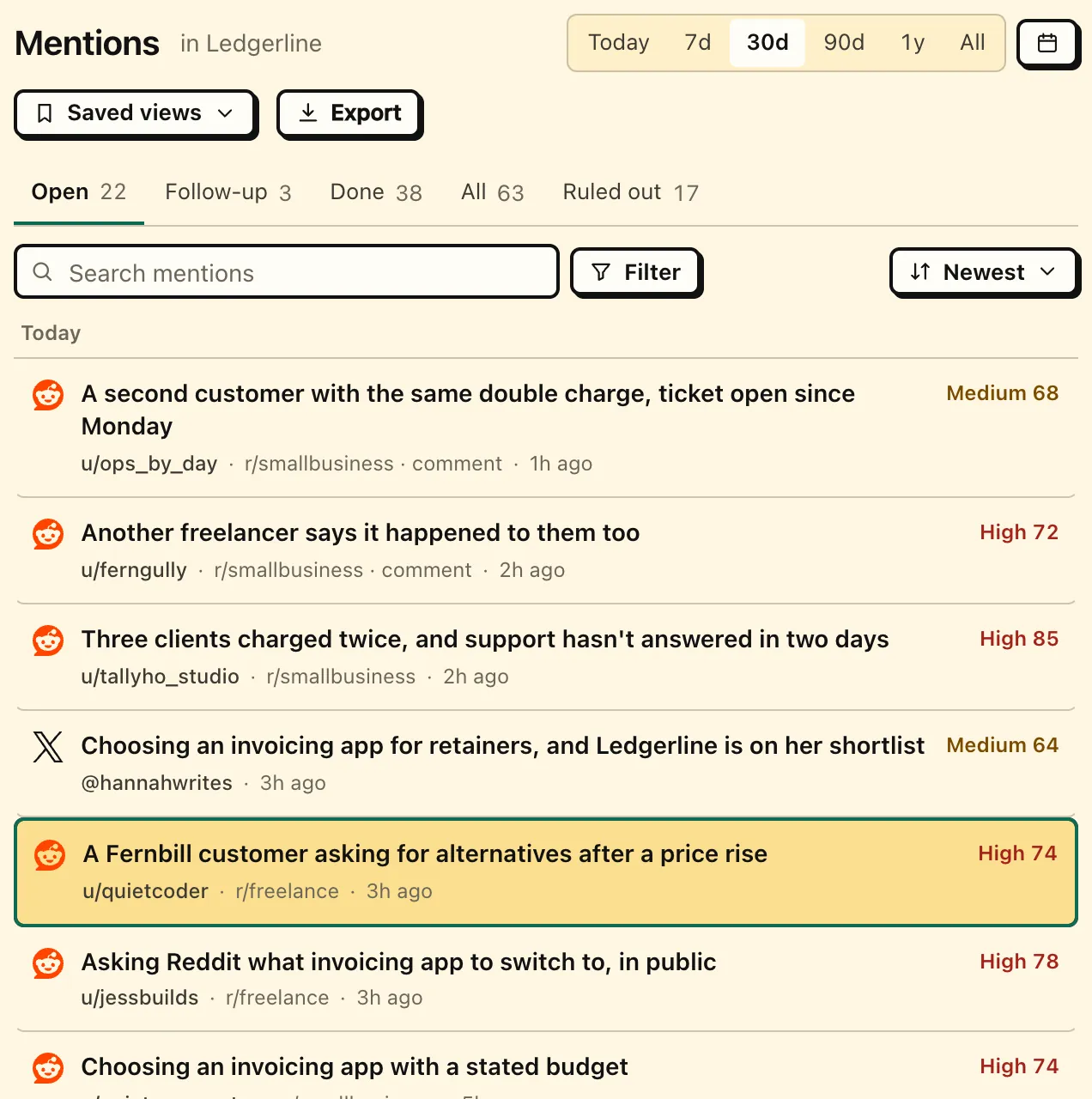
- Your brand, your rivals and your category in one feed
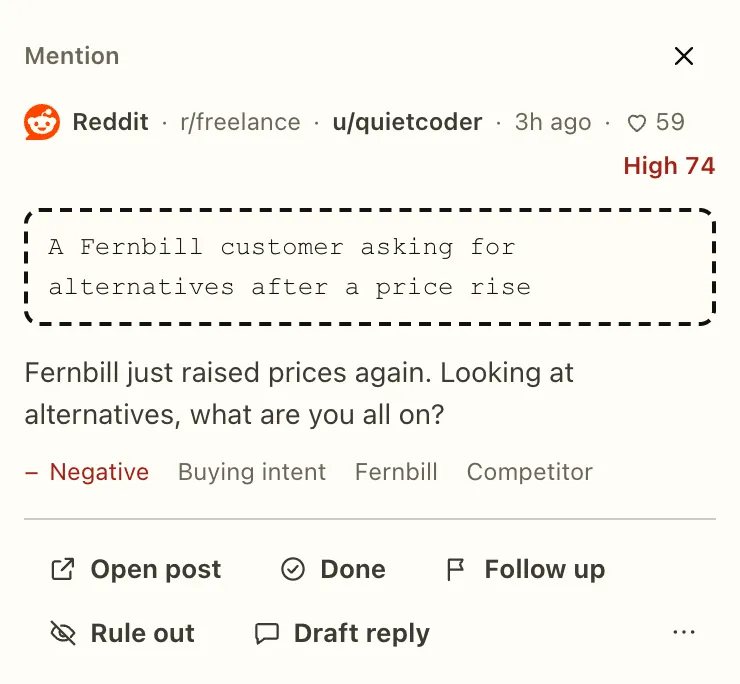
- A category and a sentiment on every post it keeps
- A written reason on every post it rules out
- Alerts to Slack, Discord, Microsoft Teams or email
Three jobs it does for a product marketer
Understand your market
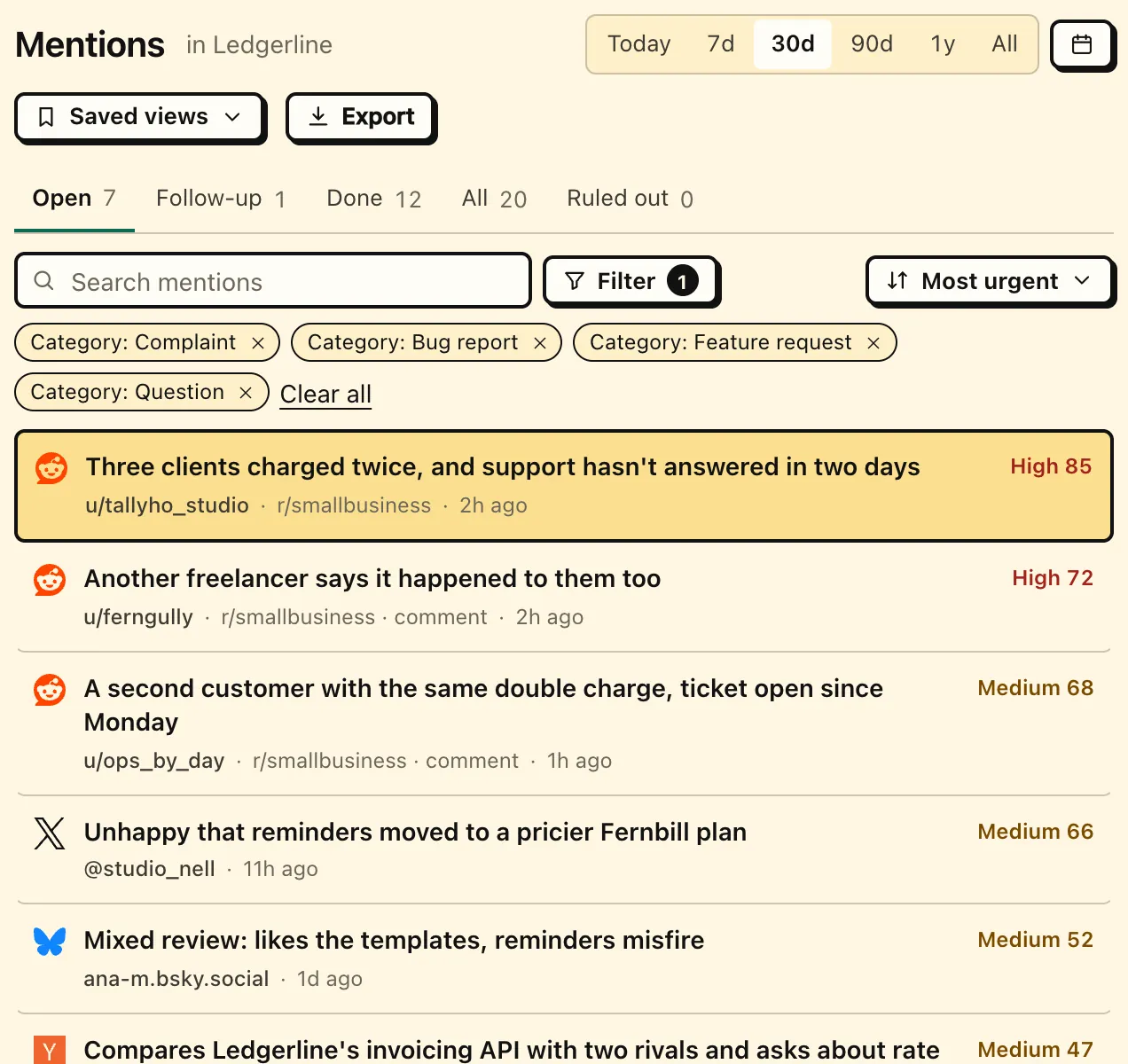
Objections, praise and feature requests in the words customers used, so a message starts from their language.
What you getA feed filtered to Complaint, Feature request or Question, most urgent first.
Watch competitors
Why people choose, leave or complain about a rival, how loud each one is, and when its pricing page changes.
What you getA card per rival with complaint, alternative, pricing and praise counts, and a one-page brief.
Spot buying signals
The threads where someone asks what to use, or weighs two tools, while they are still choosing.
What you getPosts tagged Buying intent or Comparison, and an alert when one lands.
Customer language
Customer language and objections, in order
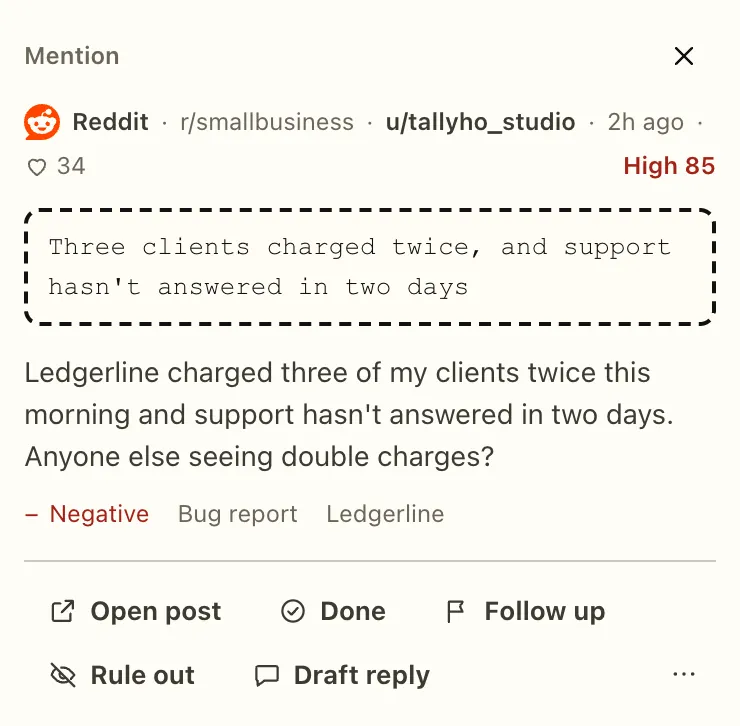
Every kept post shows what the author wrote, a link to the source, a sentiment and a category such as Complaint, Comparison, Buying intent or Misinformation. Filter to one, sort by urgency or engagement, and the pricing complaint with real reach sits above the passing mention.
- Categories include Complaint, Bug report, Feature request, Question, Comparison, Buying intent, Praise and Misinformation
- Export what a filter matches as CSV or JSON
Competitor intelligence
Rivals, tagged by what people are doing
Add a rival by its website and its posts arrive beside yours, tagged complaint, praise, looking for an alternative or pricing talk. Filter to looking for an alternative to see who is leaving a rival, and to complaints for the objections you can answer.
The brief puts a rival on one page: the last 30 days against the 30 before, then each tag with the posts behind it. Code writes it from posts already judged, so every quote links to its source.


Share of voice
Your share of the conversation, week by week
Share of voice by week charts your brand against each rival: each line is that name's share of the posts kept that week. A weekly digest lists each rival's most urgent posts.

Buying intent
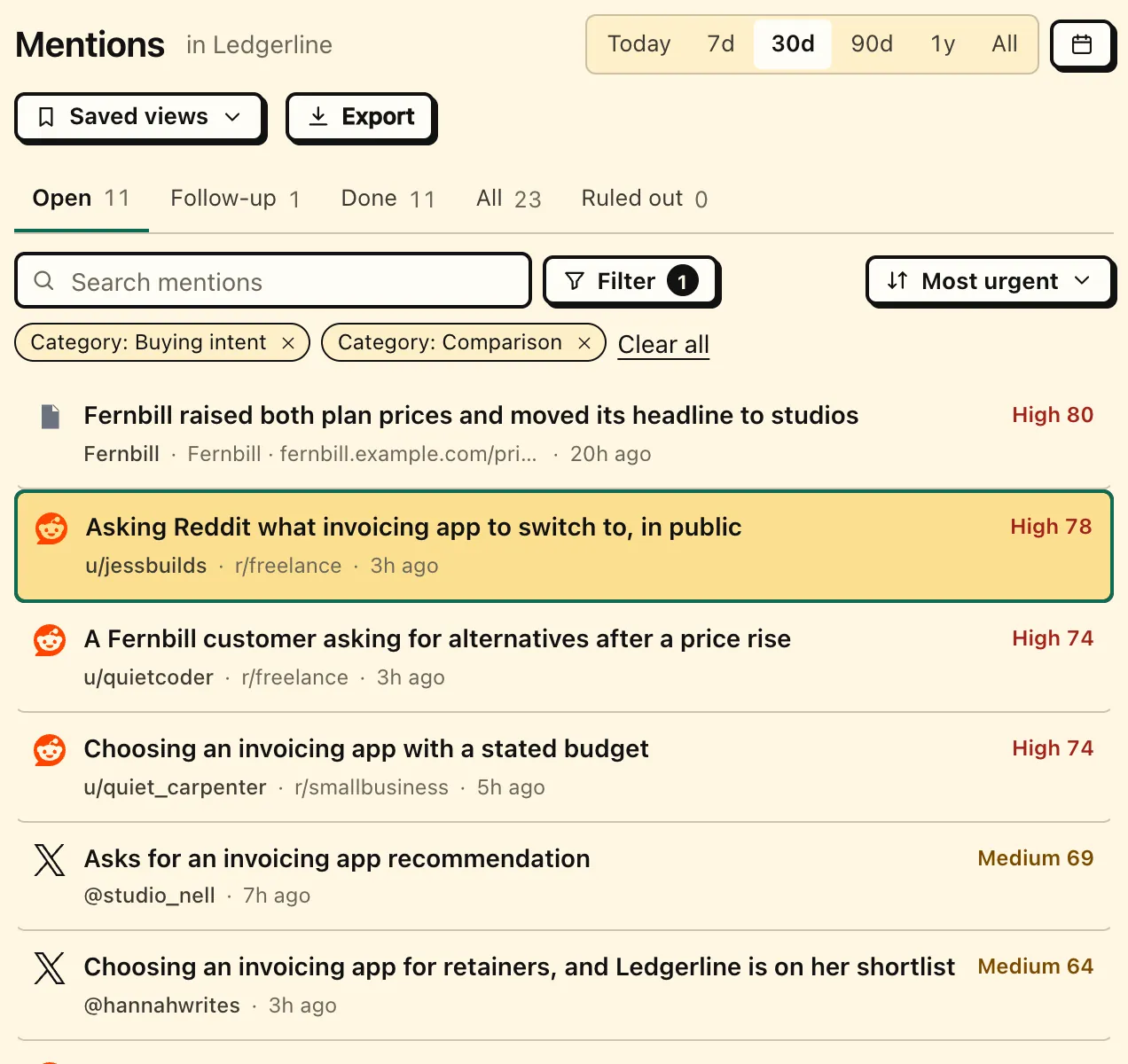
Comparison and alternative threads
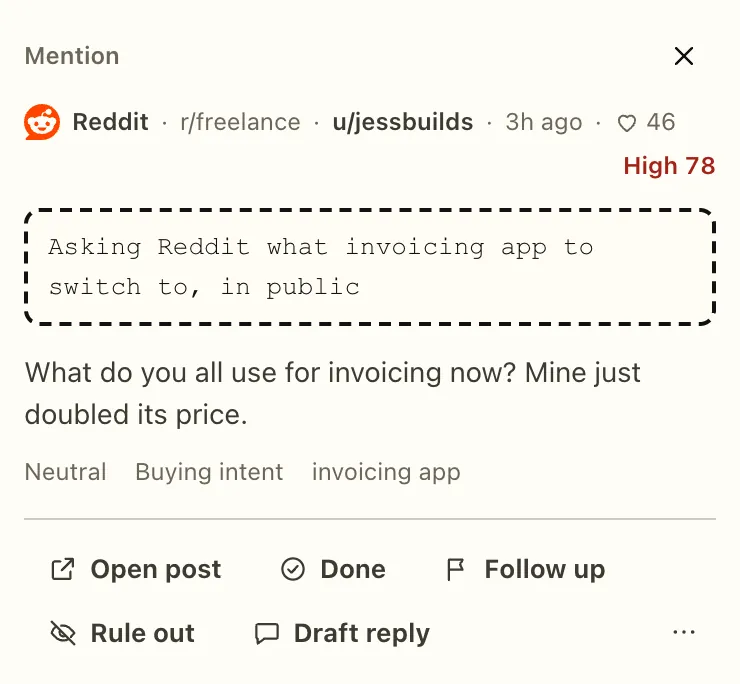
The threads where someone asks which tool to pick, or weighs two against each other, are the ones worth reading before you rewrite a message. A topic keyword such as "[rival] alternative" keeps every public post with the phrase, so you read the whole comparison and not only the posts that name you.
Each shows what the buyer weighed and what tipped it: material for a positioning line, a comparison page or a campaign.
Start with one brand free Free for one brand. No card.
Change monitoring
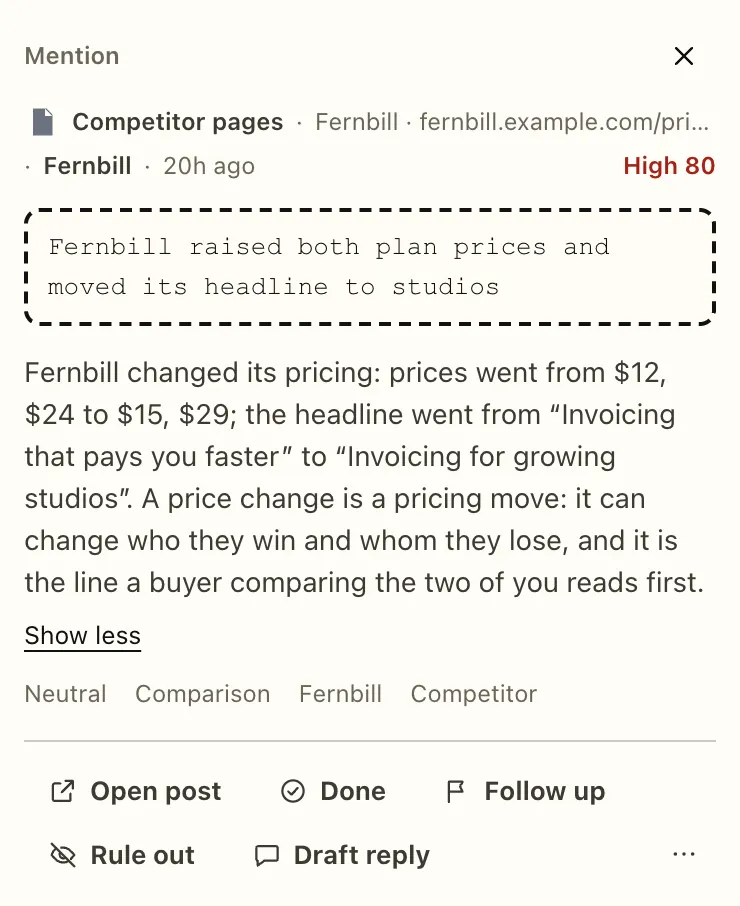
When a rival changes its pricing page
Give a rival up to three pages to watch, such as its pricing page and home page. Each check reads the page's title, first headline and every price on it. A change that holds across two checks in a row lands in your feed with the before and after, so a half-deployed page or a test does not raise an alert.
Relevance
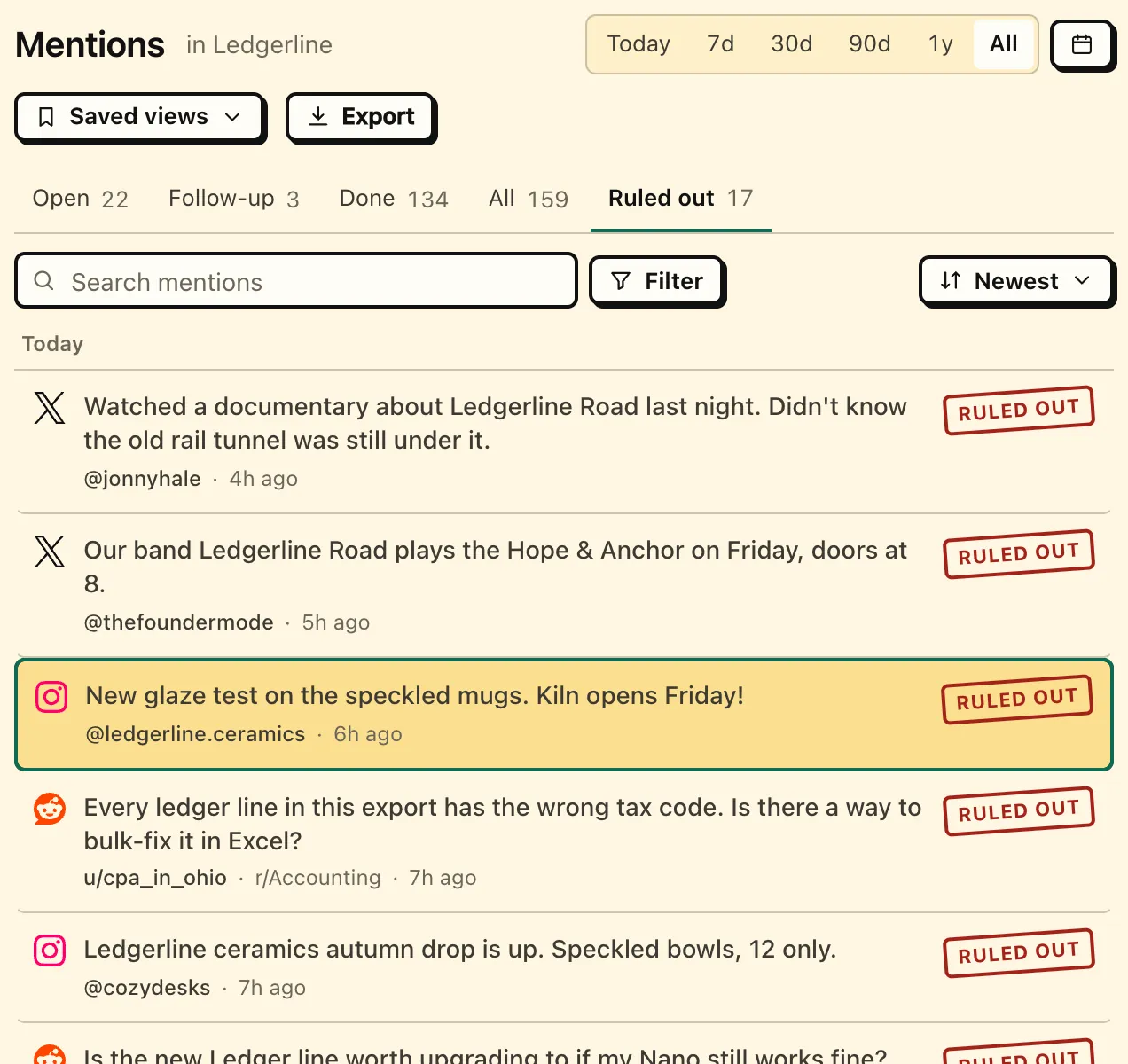
Namesakes ruled out, with the reason
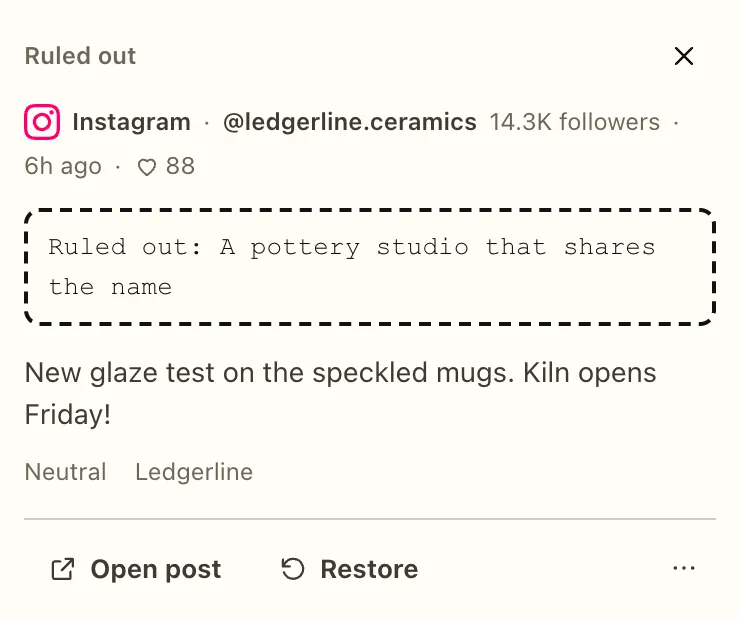
Each post is read before it reaches the feed. One about something else that shares the name, a pottery studio or a road, goes to Ruled out with a sentence saying why. Nothing is deleted: open the tab, check the call and put a post back with one click.
Watch, judge, act
Watch
Your brand, your rivals and the phrases buyers use to compare, such as "[rival] alternative", searched on a schedule.
Judge
Each post is read: kept with a category and a sentiment, or ruled out with a reason.
Act
Alerts and digests to Slack, Discord, Microsoft Teams or email, a brief per rival, CSV or JSON exports, the API and an MCP server for AI agents.
Launch day, watched
Set an instant alert for negative or urgent posts before you ship. The reaction reaches Slack, Discord, Microsoft Teams or email as it is found, and a daily digest collects the rest. Checks run on a schedule rather than as a live stream.
Into your own research and tools
Export what a filter matches as CSV or JSON for a research doc or a deck, or feed your own dashboards or an AI agent through the API and MCP server.
Searching by hand, or Sniffington?
| The job | By hand | With Sniffington |
|---|---|---|
| Finding mentions | Run each platform's search one after another, and remember to do it again tomorrow. | Searches on a schedule and keeps the new posts in one feed. |
| Telling real from noise | Scroll past every namesake and unrelated match. | Each post is read. The ones about something else are ruled out with a reason. |
| Competitor mentions | A separate saved search for each rival on each platform. | Rivals sit in a group on the same brand, and their posts arrive beside yours. |
| Finding that objection again | Search history and screenshots. | Filter by category and sentiment, sort by urgency, export the result. |
| Knowing when it happens | Check when you remember. | Instant alerts and digests to Slack, Discord, Microsoft Teams or email. |
Questions
How can product marketers use social listening?
To read objections, comparisons and alternative-seeking threads in customers' own words, to see how a rival's customers talk about it, and to watch the reaction to a launch. Sniffington gathers those public posts in one feed with a category on each.
How can product marketers monitor competitors?
Add a competitor by its website, or its names, domains and handles as keywords. Its posts arrive in the same feed as yours, tagged by what the author is doing, with share of voice by week, a brief and a weekly digest. It reads public posts and a few public pages.
How can product marketers find customer language?
Add comparison phrases such as "[rival] alternative" or "[category] for [job]" as topic keywords. Sniffington keeps every public post containing the words and ranks each by how close the author is to choosing a tool.
How does the competitor brief work?
It is written by code from the posts Sniffington has already judged: the last 30 days against the 30 before, then complaints, people looking for an alternative, pricing talk and praise, each with the posts behind it and a link to the source. No model writes it, so nothing in it is invented.
Will it post or reply for me?
No. It never posts anything. You read the conversation and decide what to do with it.